A map of the five archetypes — Classic, Avant-Garde, Sport, Utility, Diver — with real photo exemplars and the components inside each one. Every choice has a "why" attached. The point is not to copy; it's to know where you are on the map before you wander off it.
How to use this
This isn't a checklist. It's a navigation aid. Read the archetype that pulls you, then read the one next to it — most interesting watches sit on a boundary (the Tudor Black Bay 58 is a diver borrowing utility's restraint; the Audemars Royal Oak is sport pretending to be classic). After you know where you are, drop into the component sections to make individual decisions and see the reasoning behind each tradeoff.
Each archetype shows a real reference watch and a schematic diagram of its dial logic. The schematic is the abstraction — what you steal. The photo is the proof — what someone built when they made the choice you're considering.
Classic / Dress
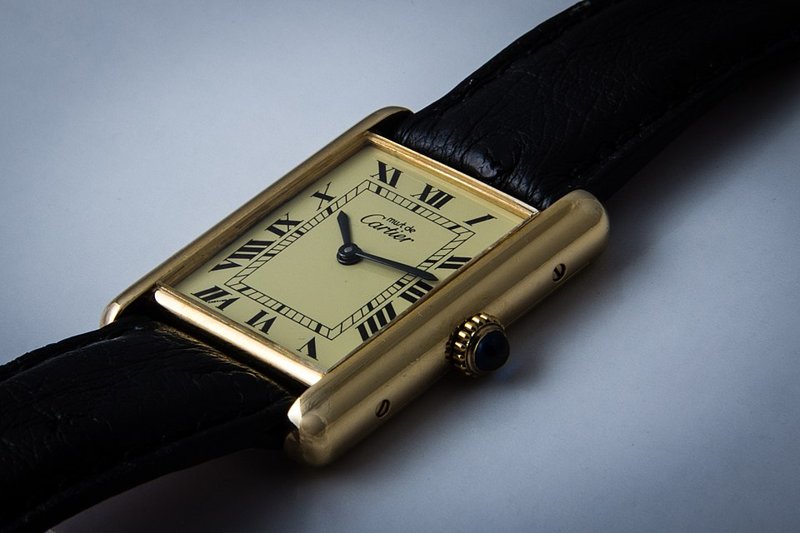
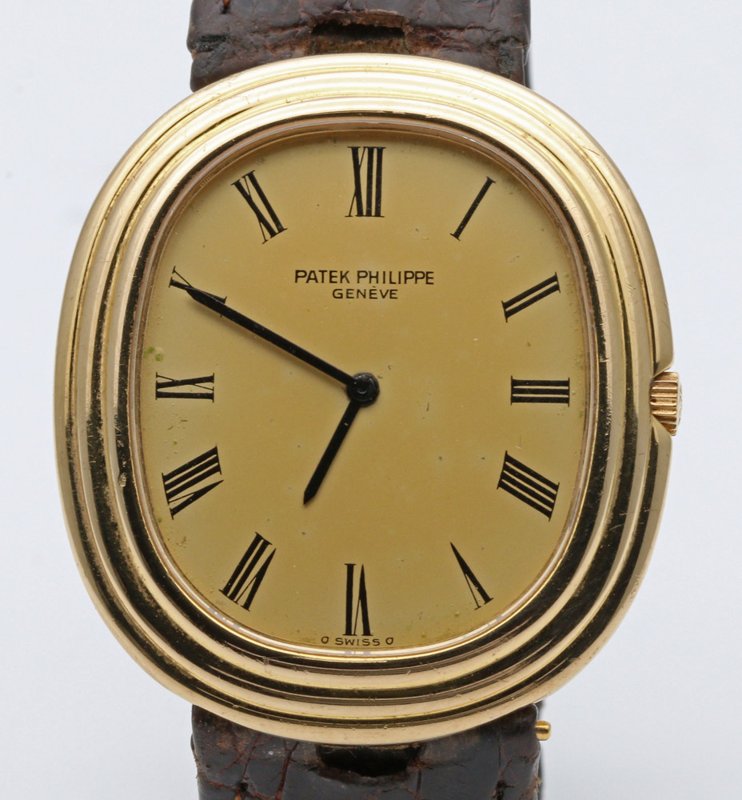
Restraint. The dress watch exists to be glanced at, not stared at. Thin case (under 10mm if possible), tapered lugs, leather strap, often manual-wind to stay thin. The dial is a graphic design problem: how few elements can you put on it and still tell time. Roman numerals, applied baton indices, or — at the extreme — nothing but a pair of hands.
Defining moves
- Diameter 36–40mm. 38mm is the current sweet spot; 36mm reads vintage.
- Thickness under 10mm, ideally 7–9mm. Thinness is the whole point.
- Dauphine or leaf hands. Never Mercedes, never sword.
- Applied indices > printed. Sub-seconds at 6 reads more horologically literate than center-seconds.
- Slim, tapered lugs. Polished case sides, brushed top — or fully polished.
- Leather strap, ideally alligator or shell cordovan. Matching tang buckle.
Exemplars to study
Components — what this archetype demands
| Component | Choice | Why |
|---|---|---|
| Movement | Miyota 9015 or thin Sellita SW210 | The 9015 is 3.9mm thick — the only Japanese auto thin enough not to bulge a dress case. |
| Case material | Polished steel, or precious metal | Brushed finishes are tool-watch grammar. Classic = polished case sides. |
| Crystal | Sapphire, lightly domed, single-sided AR | The dome is critical — flat sapphire looks contemporary, dome looks horological. |
| Dial finish | Lacquered white, silvered sunray, or salmon | Salmon is the current move if you want to look knowledgeable without being safe. |
| Hands | Dauphine, leaf, or syringe | Hand shape carries era and house identity more than any other component. |
| Lume | None, or near-invisible | Lume on a dress watch is a tell. It says you couldn't commit. |
| Strap | Black or brown alligator, 18–20mm, tang buckle | Tang is more "correct" than deployant. |
Miyota 9015 (auto)
3.9mm thick, 28,800 bph, hacks & hand-winds, ~42h reserve. Builds a sub-10mm case. ~$130.
Seiko NH35
5.32mm thick, 21,600 bph (visibly steppy), 41h reserve. Workhorse — but thickness kills it for dress. ~$30.
Avant-Garde
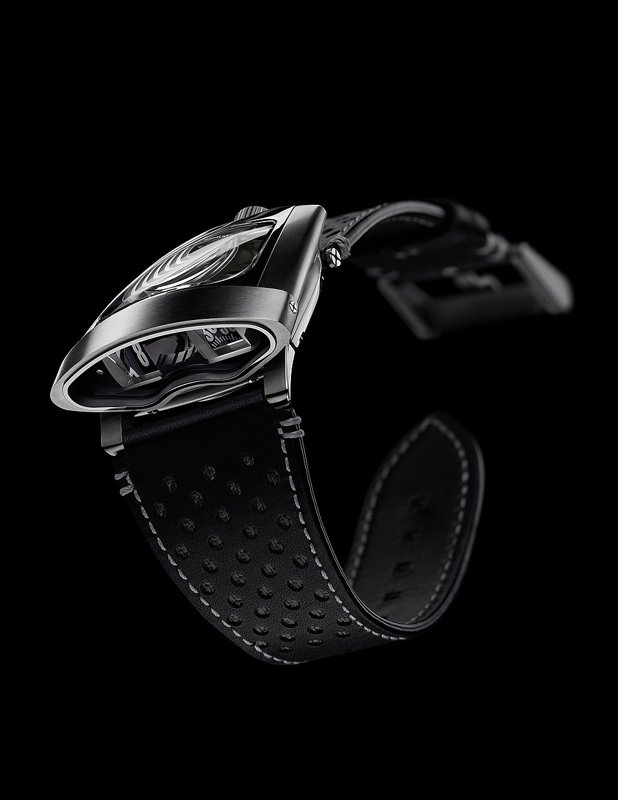
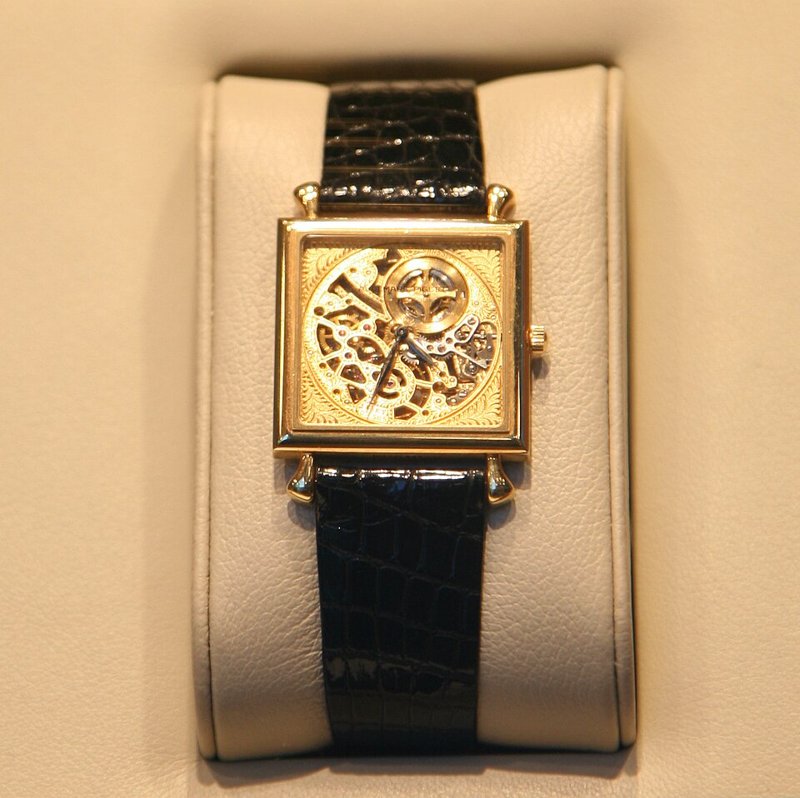
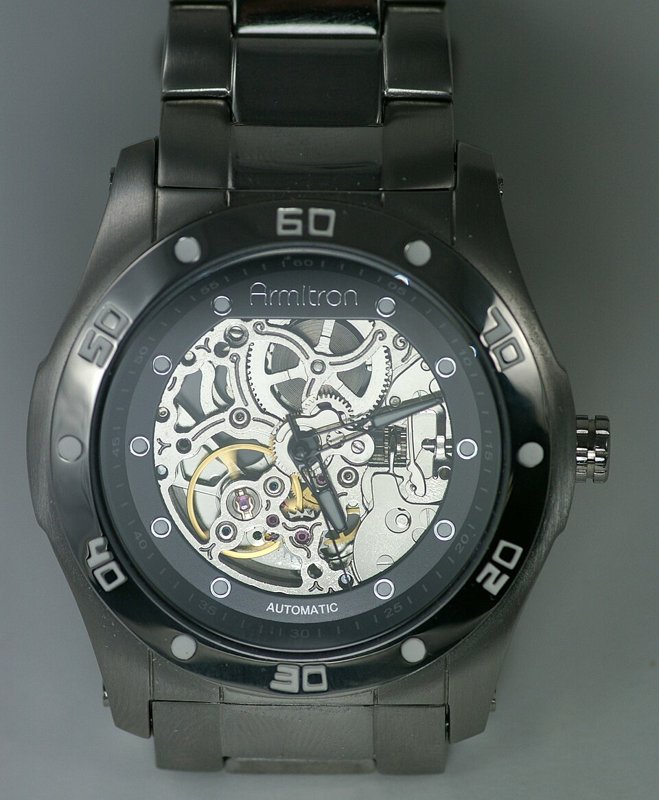
A rejection of "where the hands go." Avant-garde watches break the symmetric dial. Time gets displayed sideways, on a wandering hour disk, through a peephole, via a needle dragging through liquid. The mechanism is part of the visual — exposed, sculpted, lit. Materials get strange: sapphire cases, forged carbon, ceramic.
Defining moves
- Asymmetric layout: time pushed off-center, subdials at odd angles.
- Exposed mechanism: skeleton dial, open balance, visible gear train.
- Unconventional time display: wandering hours, jumping hours, retrograde, satellite.
- Cases that aren't round or aren't symmetric.
- Materials that signal "not steel": titanium, forged carbon, ceramic.
Exemplars to study
Components — what this archetype demands
| Component | Choice | Why |
|---|---|---|
| Movement | Miyota 82S0 (open-heart), or modified SW200 | True avant-garde is custom architecture. For a builder: pick a movement you'll display and design the dial around it. |
| Case shape | Tonneau, cushion, asymmetric, or sapphire | Round is the default — avoid it unless you have a reason. |
| Case material | Titanium G5, forged carbon, ceramic | Steel reads conservative here. |
| Crystal | Domed sapphire — or sapphire case entire | The whole-sapphire case is the maximum flex. Domed sapphire on a tonneau is the achievable version. |
| Dial | Skeleton, sandwich, multi-layer | Depth matters more than color. Stack 2–3 layers. |
| Hands | Custom shape, or no hands | If you keep hands, signature shape. If you drop them, design the indicator (disk, retrograde, dot). |
Miyota 82S0 (open-heart auto)
Open balance at 12, no second hand. Cheap (~$50) and gives a real "show the movement" feature. Pair with a sandwich dial.
Closed 9015 with skeletonized rotor
Cleaner from the back but offers nothing to the front. If you want avant-garde on the dial, you need exposure on the dial side.
Sport / Chronograph
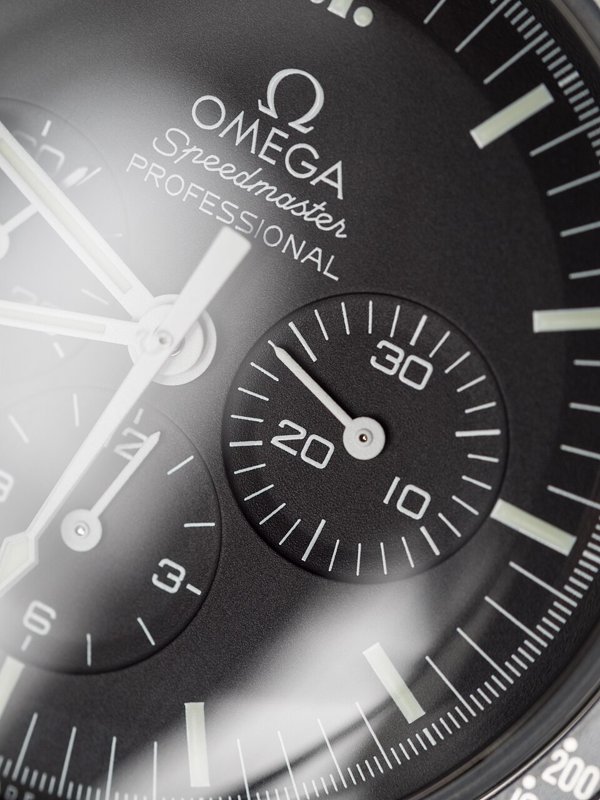
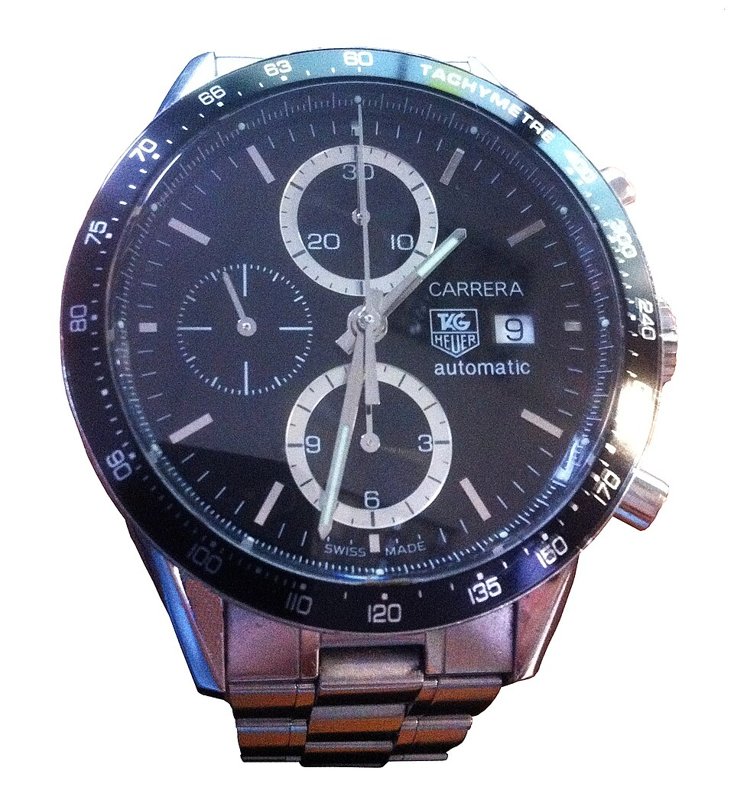
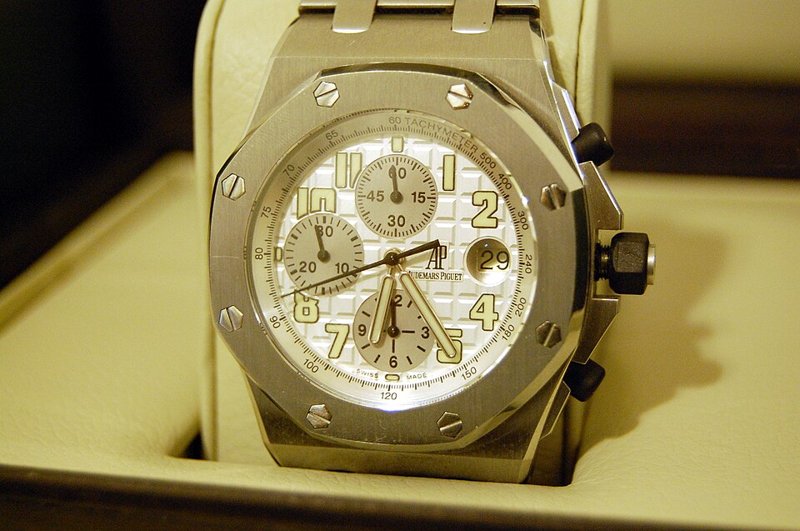
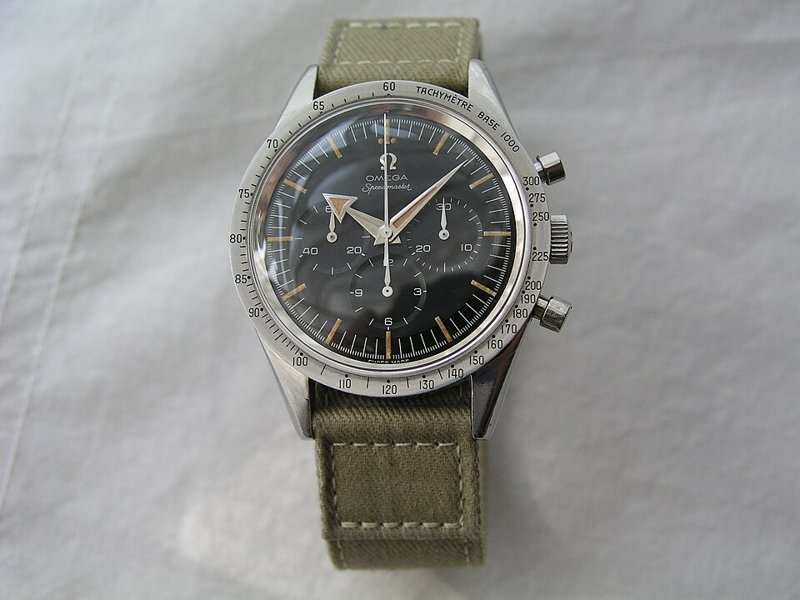
Performance signaling. The sport watch reads quickly under bad conditions — high-contrast dial, oversized indices, lume. The chronograph is its highest expression: a stopwatch you wear, calibrated against speed, pulse, or distance. Bigger cases, lugs that flare, integrated bracelets, pump pushers.
Defining moves
- Diameter 40–44mm. Smaller reads vintage; larger reads modern.
- Tri-compax (3 subdials) is the canonical chrono layout. Bi-compax is the vintage flex.
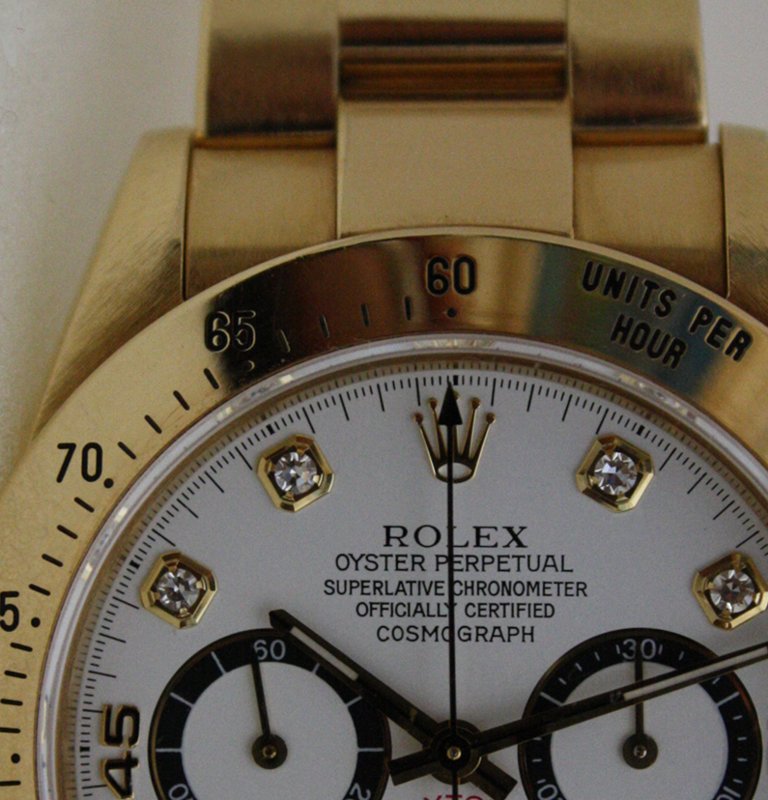
- Tachymeter bezel — 60→400 scale, used with the second hand to compute speed.
- High-contrast dial: panda (white with black subs), reverse panda (black with white subs).
- Applied indices, fully lumed. The dial reads in motion.
- Integrated bracelet is the "luxury sport" move (Royal Oak, Nautilus, Overseas).
Exemplars to study
Components — what this archetype demands
| Component | Choice | Why |
|---|---|---|
| Movement | Seiko VK64 (mecha-quartz) or Seagull ST19 (manual mech) | Mechanical chrono is expensive. VK64 is $30, smooth-sweeping mechanical chrono action with quartz timekeeping. ST19 is the affordable real mechanical. |
| Case size | 40–42mm × 12–14mm thick | Chronos run thick because of the chrono module. Don't fight it — embrace it with strong lug architecture. |
| Pushers | Pump (round) or screw-down | Pump = elegant, traditional. Screw-down = water resistance, "tool" feel. |
| Bezel | Tachymeter, or fixed polished | Tachy is functional; polished is dressy. Don't put a rotating bezel on a sport chrono — that's diver vocabulary. |
| Dial | Panda, reverse panda, or matching subs | Subdials should either pop (panda) or recede — never sit in the middle. |
| Crystal | Sapphire flat with double AR; or hesalite for Speedmaster tribute | Hesalite scratches, polishes out with Polywatch. Sapphire is the modern default. |
Seiko VK64 mecha-quartz
~$30. Quartz time (±20 sec/month), but chrono is mechanically actuated with a sweeping seconds. Looks and feels like a mechanical chrono when running. Best price/performance in chrono mechanisms.
Seagull ST19
~$250. Real mechanical column-wheel chrono (Venus 175 descendant). Manual wind. Choose ST19 only if "fully mechanical" is part of the watch's argument.
Utility / Field
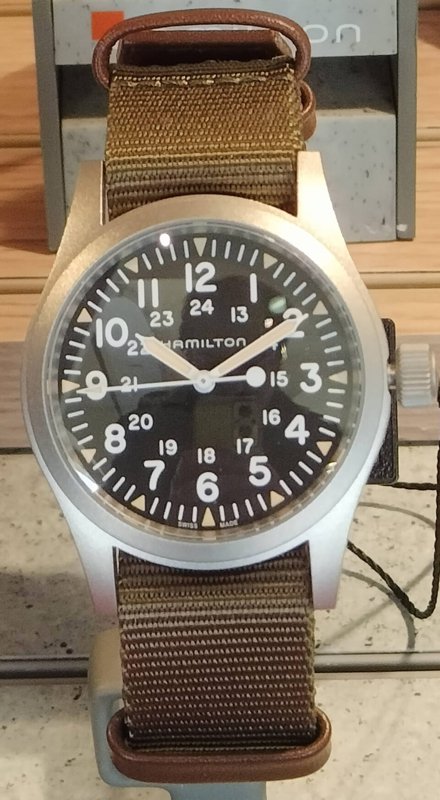
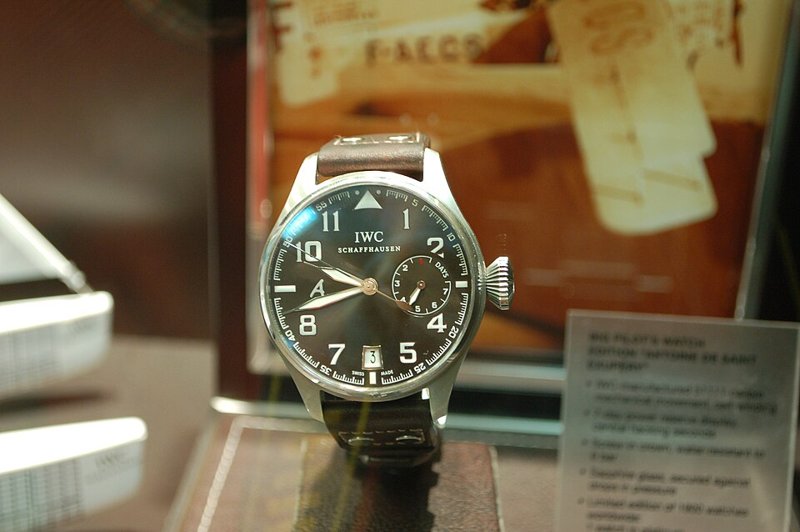
Legibility as the only virtue. The utility/field watch comes from military spec — wear gloves, glance once, get the time, do the job. Matte dial, full Arabic numerals, oversized hands, 24-hour inner track, full lume, no date or a minimal date. The opposite of dress: every element fights to be readable, not refined.
Defining moves
- Diameter 36–40mm. True mil-spec is 36–38mm. 40 is the modern accommodation.
- Full 1–12 Arabic numerals, often with 13–24 inner track in smaller text.
- Matte black, matte olive, matte sand dial. Anti-reflective.
- Hands: cathedral, syringe, or simple pencil. Heavily lumed.
- Bead-blasted or brushed case — no polishing (polished surfaces flash and give position away).
- NATO, Zulu, or canvas strap.
Exemplars to study
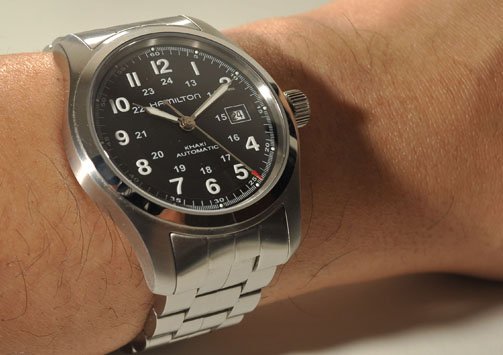
Components — what this archetype demands
| Component | Choice | Why |
|---|---|---|
| Movement | Sellita SW200, ETA 2824, Miyota 9015, or NH35 | Movement spec matters (hacking, hand-wind); movement finishing doesn't — the caseback is closed steel. |
| Case material | Bead-blasted 316L steel, or PVD black | Polished steel reflects. Field watch is bead-blasted matte — original mil-spec reason, retained as visual signature. |
| Crystal | Sapphire flat, double-sided AR | Original mil watches used acrylic; modern sapphire is hard enough and clearer. |
| Dial | Matte black with cream / old-radium printed Arabics | Matte is non-negotiable. Color signals era: cream = WWII, white = modern, green = current. |
| Hands | Syringe, cathedral, or pencil — full lume | Hands should be longer than necessary. Minute hand touches the chapter ring. |
| Lume | BGW9, C3, or tritium tubes | Tritium tubes (H3) glow for ~25 years without charging. Actual mil spec. |
| Strap | NATO, Zulu, or distressed leather | NATO is the historical correct answer (British military origin). |
Sellita SW200-1 (Swiss)
~$150. 28,800 bph, hacks, hand-winds, COSC-able. Swiss provenance to back up "professional" claim of a field watch.
Seiko NH35
~$30. 21,600 bph, hacks, hand-winds, bombproof. Right call under $400 retail. Lower beat rate is fine for a field watch.
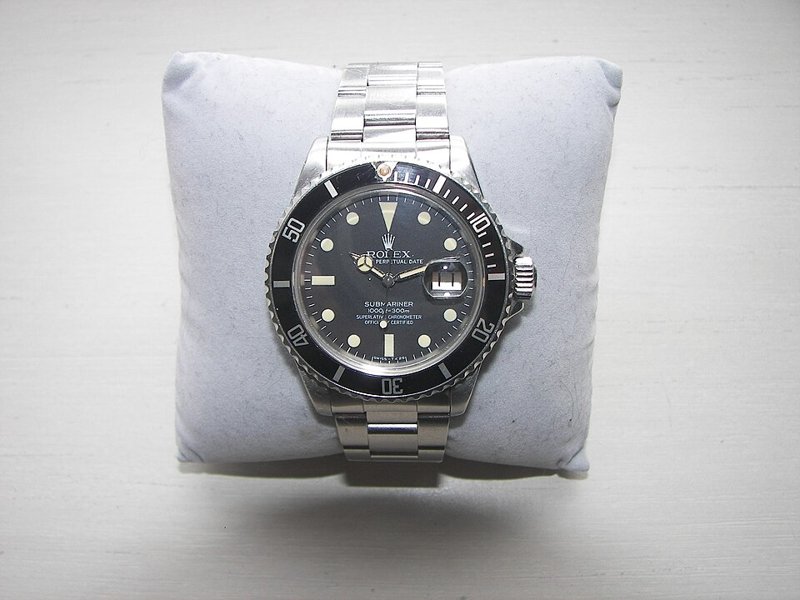
Diver
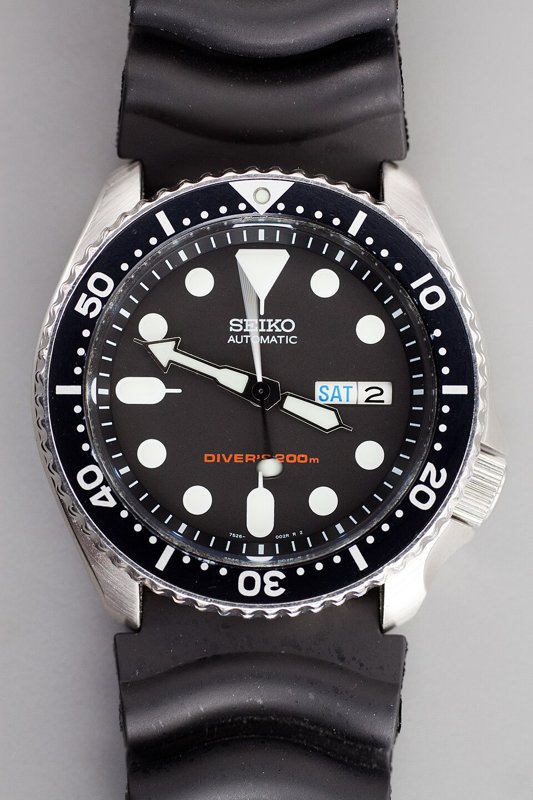
The dive watch is a tool with rules — ISO 6425 defines the spec: 100m WR minimum, unidirectional rotating bezel marked at 5-min increments, lume readable at 25cm in the dark. Inside those rules there's enormous design latitude — which is why the diver is the most iterated, copied, and remixed archetype in modern watchmaking.
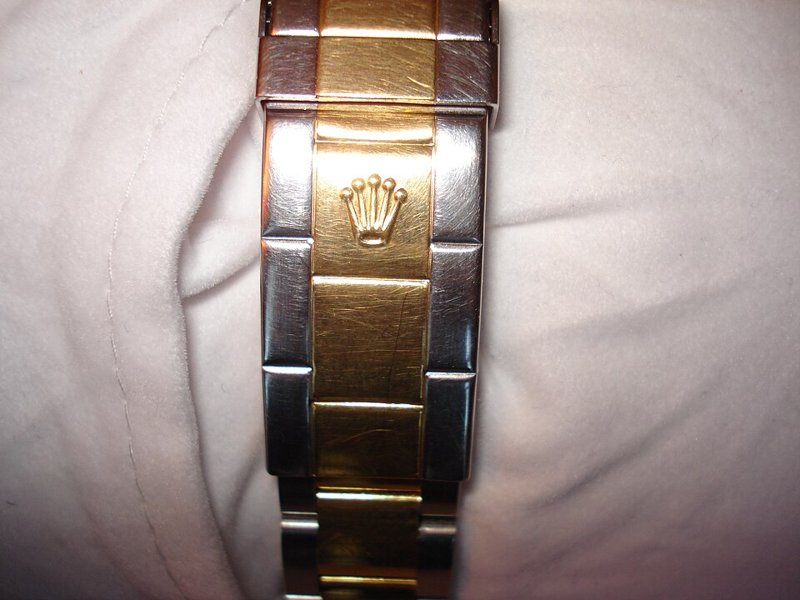
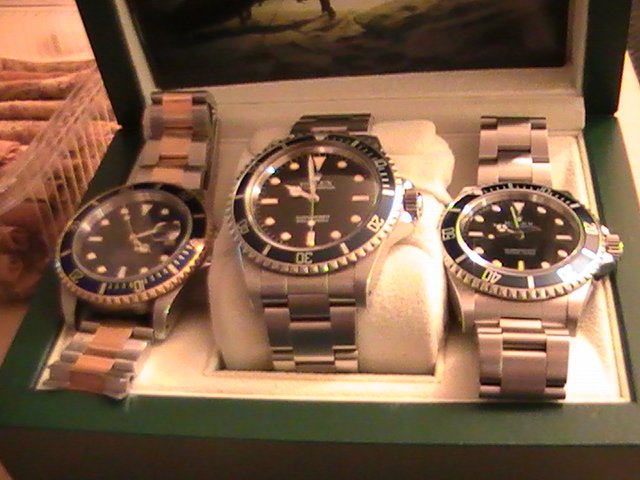
Defining moves
- Diameter 38–44mm. 40mm Submariner-spec is the default; 38mm Black Bay 58 is the current darling.
- Unidirectional rotating bezel, 60-min scale, lumed pip at 12.
- Screw-down crown, often crown guards. Screw-down caseback.
- Oversized indices and Mercedes/snowflake/sword hands — visible at depth, in murk, with mask.
- Lume on everything — hands, indices, bezel pip, often second-hand tail.
- Bracelet with diver's extension, or rubber/tropic strap.
Exemplars to study
Components — what this archetype demands
| Component | Choice | Why |
|---|---|---|
| Movement | Seiko NH35 / NH38 / NH36; or Miyota 9015; or Sellita SW200 | NH35 is the dive-watch industry standard. Bombproof, cheap, every parts supplier carries it. NH38 (no date) is the current taste move. |
| Water resistance | 200m minimum (300m is the flex) | 100m is the ISO floor, "200m" reads more confident. 300m+ needs helium escape valve — usually overkill. |
| Bezel insert | Ceramic, aluminum, or sapphire | Most-asked question in the genre. See vs-block. |
| Case shape | Oyster (Sub), cushion (SKX), tonneau, turtle | Each shape carries lineage. Oyster = Rolex grammar. Cushion = 70s tool-watch grammar. |
| Crown | Screw-down at 3 or 4 o'clock | 4 o'clock (Seiko style) = no guards, asymmetric case. 3 o'clock + guards = Submariner classic. |
| Crystal | Domed sapphire with inside AR — or domed acrylic for vintage | Double-domed sapphire is the modern flex. |
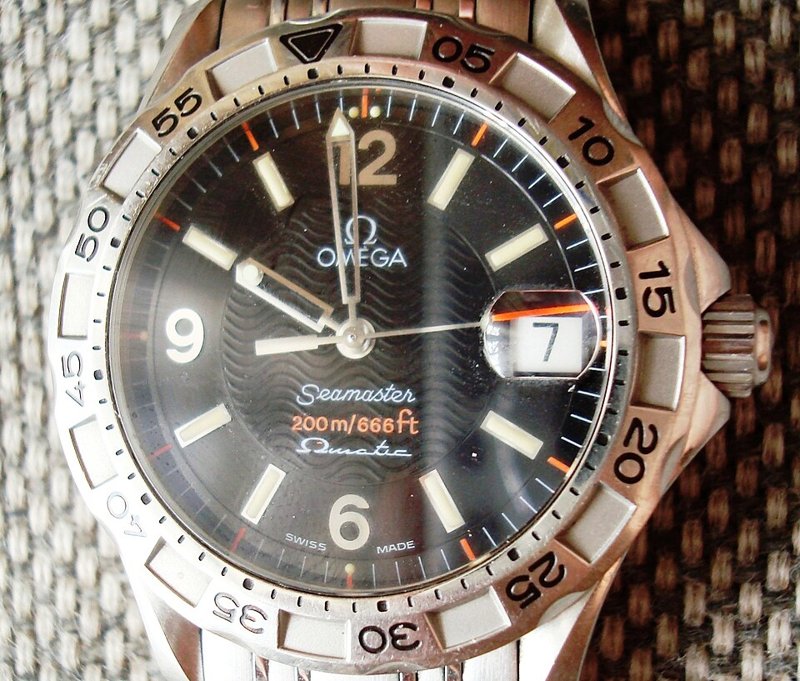
| Hands | Mercedes (Rolex), snowflake (Tudor), sword (Omega), plongeur (Doxa) | Hand vocabulary is house identity. Mixing shapes is the most common micro-brand sin. |
| Lume | BGW9 (blue) on hands + indices + bezel pip | BGW9 looks white in daylight, glows ice-blue. Apply thick — divers should glow 8+ hours. |
Ceramic bezel insert
Scratch-proof in daily use, retains finish for decades, deep saturated color. Modern Subs, Black Bays, Pelagos all use ceramic.
Aluminum bezel insert
Cheap (~$10), patinas. Feature if you want vintage aesthetic. If you don't want that, ceramic.
Mercedes hands (Rolex grammar)
Circle in the hour hand is a lume reservoir. Puts your design in direct conversation with Rolex — risky.
Snowflake hands (Tudor grammar)
French Navy Tudor refs (1969). Square hour gives a different signature. Tudor is less "off-limits." Currently feels fresher in micro-brand work.
Movements — every choice, every tradeoff
Movement choice has more downstream consequences than any other decision. Thickness sets case minimum thickness. Beat rate determines whether the second hand sweeps smoothly or steps. Stem position determines crown placement. Pick the movement first, then design the case around it.
| Movement | Type | Beat (bph) | Thick | Reserve | Hack/Wind | Cost | Best for |
|---|---|---|---|---|---|---|---|
| Seiko NH35 | Auto, 3-hand+date | 21,600 | 5.32mm | 41h | Yes/Yes | ~$30 | Diver, Utility |
| Seiko NH38 | Auto, no date | 21,600 | 5.32mm | 41h | Yes/Yes | ~$32 | Diver, Utility |
| Seiko NH36 | Auto, day-date | 21,600 | 5.32mm | 41h | Yes/Yes | ~$35 | Diver, Sport |
| Miyota 8215 | Auto, 3-hand+date | 21,600 | 5.67mm | 40h | No/No | ~$20 | Avoid — no hacking |
| Miyota 9015 | Auto, 3-hand+date | 28,800 | 3.90mm | 42h | Yes/Yes | ~$130 | Classic, Utility, Diver |
| Miyota 82S0 | Auto, open-heart | 21,600 | 5.67mm | 40h | No/No | ~$60 | Avant-garde |
| Miyota 90S5 | Auto, skeleton | 28,800 | 3.90mm | 42h | Yes/Yes | ~$150 | Avant-garde, Classic |
| Sellita SW200-1 | Auto Swiss, 3-hand+date | 28,800 | 4.60mm | 38h | Yes/Yes | ~$150 | Classic, Utility, Diver |
| Sellita SW210-1 | Manual Swiss | 28,800 | 2.50mm | 42h | Yes/Yes | ~$160 | Classic |
| Seagull ST19 | Manual chrono, column wheel | 21,600 | 5.55mm | 45h | Yes/N/A | ~$250 | Sport |
| Seiko VK64 | Mecha-quartz chrono | n/a | 5.90mm | 3yr battery | N/A | ~$30 | Sport |
| Valjoux 7750 | Auto chrono | 28,800 | 7.90mm | 44h | Yes/Yes | ~$400+ | Sport |
The decisions, plainly
Pick Miyota 9015 when…
Thinness matters (under 11mm total). You want a smooth 8-beat sweep. You're willing to spend $130 because the rest of the watch is finished to match.
Pick Seiko NH35 when…
Diver or field watch where thickness is acceptable. Budget pressure is real (retail under $500). You want a movement every watchmaker on earth can service.
Pick Sellita SW200 when…
"Swiss" needs to appear on the dial. Targeting retail $700+. COSC certification as an option. Display caseback (it finishes nicely).
Skip Sellita when…
You don't have a story for the $100+ over a 9015. "Swiss" by itself isn't a story — Miyota's 9015 outperforms SW200 on every objective spec except COSC certifiability.
Cases — material, size, finishing
Material
| Material | Hardness (Vickers) | Properties | Best for |
|---|---|---|---|
| 316L steel | ~200 HV | Industry standard. Easy to machine, polish, brush. Corrosion-resistant. Heavy. | Everything. Default. |
| 904L steel | ~230 HV | Rolex marketing. Slightly harder, harder to machine. | Marketing. Indistinguishable from 316L in real use. |
| Titanium Grade 2 | ~145 HV | Light (~60% of steel). Softer than steel — scratches easily. Hypoallergenic. | Lightweight builds, nickel allergy. |
| Titanium Grade 5 (6Al-4V) | ~350 HV | Light, hard, premium. Omega, Sinn, Pelagos. Expensive to machine. | Avant-garde, Diver high-end |
| Bronze (CuSn8) | ~190 HV | Patinas through oxidation. Each watch develops unique surface. | Divisive — use only if patina is the thesis. |
| Ceramic (zirconia) | ~1200 HV | Effectively scratch-proof. Brittle. Hard to machine. | Avant-garde bezels, luxury sport cases. |
| Forged carbon | varies | Composite — unique pattern from compressed fibers. Very light. Expensive. | Avant-garde, Sport |
| Sapphire | ~2200 HV | Whole case in sapphire. Transparent. ~$10K+ for the case alone. | Ultra high-end avant-garde only. |
Finishing
Finishing is the difference between "looks $300" and "looks $3,000," and it costs essentially nothing in materials — it costs labor.
- Bead-blasted — uniform matte texture. Tool/military. Cheapest. Easy to refinish.
- Brushed — directional satin. Hides scratches. Standard on tool watches.
- Polished — mirror. Dressy. Shows every scratch. Use sparingly.
- Polished bevels (anglage) — mirror chamfer between brushed surfaces. The grail. Royal Oak, Lange Saxonia, Grand Seiko all live here.
- PVD coating — physical vapor deposition. Black, gunmetal, gold. Wears off at edges.
- DLC — diamond-like carbon. Harder, more durable black. Used on premium tactical watches.
Crystals — acrylic, mineral, sapphire
| Crystal | Hardness (Mohs) | Properties | Best for |
|---|---|---|---|
| Acrylic (Hesalite) | 2–3 | Plastic. Scratches but polishes out with Polywatch. Warm look. Shatter-resistant. | Sport (Speedy tribute), Diver (vintage), Utility (mil-spec) |
| Mineral glass | 5–6 | Hardened glass. Scratches more than sapphire, can't be polished. Cheap. | Avoid. Sub-$100 watches only. |
| Hardlex (Seiko) | ~7 | Seiko's chemically strengthened mineral. Between mineral and sapphire. Used on SKX. | Honest mid-tier. |
| Sapphire (corundum) | 9 | Synthetic single crystal. Scratch-proof for daily wear. Can shatter on extreme impact. | Default for everything. |
Shape
- Flat — modern, clean, contemporary. Easiest to AR-coat.
- Single dome — slight bulge. Vintage warmth without edge distortion.
- Double dome — concave inside to match. Full dome look with minimal optical distortion. Black Bay 58, Halios Seaforth use this.
- Box / top hat — flat-topped tall crystal with vertical walls. Vintage Heuer / 70s. Edge distortion is the feature.
Dials — finish & texture
| Finish | Look | Best for |
|---|---|---|
| Matte / flat painted | Uniform, no reflection. Tool, military. | Utility, Diver |
| Sunray / sunburst | Brushed from center; lights up at one angle. | Classic, Sport |
| Lacquer / piano gloss | Deep wet-look. Expensive to apply cleanly. Dressy, vintage. | Classic |
| Grand Feu enamel | Fired multiple times at 800°C. Pure deep white. $$$ | Classic (high-end) |
| Sandwich dial | Two-layer: top has cut-outs, lume beneath. Panerai signature. | Diver, Utility |
| Tapisserie / guilloché | Engraved (waffle, basket-weave). Royal Oak / Patek. | Sport (luxury), Classic |
| Fumé / smoked gradient | Darkens from center to edge. H. Moser made it modern. | Classic, Avant-garde |
| Meteorite | Slice of Muonionalusta/Gibeon, acid-etched. Each dial unique. | Classic (high-end), Avant |
Color signaling
- White / silver / cream — classic, dressy.
- Black — universal. Hardest color to mess up.
- Blue — current default for "modern luxury sport." Saturated = aggressive; navy = restrained.
- Green — the 2020s trend. Pulled from Rolex Submariner Hulk → everywhere.
- Salmon — pinkish-orange. The 2020s dress-watch flex. "I know what I'm doing."
- Brown / tropical — faded toward chocolate over decades. Now faked deliberately.
- Orange / yellow — high-visibility tool. Doxa, Breitling Emergency. Strong identity, narrow audience.
Hands & indices — the visual signature
Hand shape is the highest-impact visual decision after case shape. A Mercedes hand on a watch announces "I am in Submariner's lineage" before you read a word. Hand vocabulary is house identity. Mixing hand styles is the most common amateur sin.
Hand families
| Hand | Visual | Heritage / Use |
|---|---|---|
| Dauphine | Faceted triangle, often polished steel. | Classic — Patek, JLC, vintage Omega. |
| Leaf (feuille) | Slim curved leaf, often blued. | Classic — Cartier, French dress. |
| Breguet (pomme) | Open circle near tip. Blued steel. | Classic — Breguet, traditional dress. |
| Syringe | Long pointed needle. | Classic, Utility — Longines, vintage IWC. |
| Sword | Straight blade with sharp point, lume-filled. | Sport, Diver — Omega Seamaster, IWC. |
| Mercedes | Sword with circle-and-spokes lume reservoir. | Diver — Rolex Submariner, Explorer. |
| Snowflake | Square lume block on hour hand. | Diver — Tudor (1969 French Navy). |
| Cathedral | Hour hand with stained-glass cutouts, full of lume. | Utility, Diver — Panerai Radiomir, vintage Longines. |
| Pencil / baton | Simple flat rectangle with lume center. | Universal default. |
| Plongeur / lollipop | Second hand with lumed circle near tip. | Diver — Doxa, Seiko Marinemaster. |
| Broad arrow | Wide spear-tip hour hand. | Sport, Utility — Speedmaster CK2915. |
Lume — BGW9, C3, Old Radium
Modern lume is Super-LumiNova — a Swiss photoluminescent pigment (Nemoto Lumibrite is Seiko's equivalent). Not radioactive; charges from light, glows 8–12 hours. Tritium gas tubes (H3) are self-powered for ~25 years — Marathon, Luminox, some Ball.
| Grade | Day color | Glow color | Brightness | Best for |
|---|---|---|---|---|
| C3 | Yellow-green | Yellow-green | Brightest | Utility, Diver (max function) |
| C1 | White-cream | Green | Medium | Utility |
| BGW9 | White (almost) | Ice blue | High | Diver, Sport (modern luxe) |
| Old Radium | Yellow / tan | Pale green | Lower | Utility, Diver (vintage tribute) |
| Lumicast (Seiko) | White-green | Bright green | Very bright | Diver — Seiko-house only |
| Tritium H3 tubes | Various | Constant glow ~25 yrs | Lower (always on) | Utility (genuine military) |
BGW9 (the current move)
Almost white in daylight, glows ice-blue at night. Modern and premium. Slightly dimmer than C3 but the daytime appearance is cleaner. Standard on Tudor, Omega, most modern luxury divers.
C3 (max bright)
Brightest consumer lume. Yellow-green in daylight (looks dated or "tool-watch authentic" depending on your reading). When raw legibility outranks daytime aesthetics.
Straps & bracelets
Straps
| Strap | Material | Best for |
|---|---|---|
| Alligator | Genuine alligator, often padded | Classic (formal) |
| Calfskin | Smooth or textured calf | Classic, Sport |
| Shell cordovan | Polished equine (Horween) | Classic (dressy casual) |
| Suede | Brushed leather underside | Classic casual, Utility |
| Distressed leather | Pre-aged, oiled, heavy stitching | Utility |
| NATO / Zulu | Woven nylon, single-pass | Utility, Diver (casual) |
| Canvas / sailcloth | Heavy woven cotton | Utility, Sport (vintage) |
| Rubber (vulcanized) | Tropical or integrated | Sport, Diver |
| FKM rubber | Premium fluoroelastomer | Diver (modern luxe) |
| Tropic | Perforated dimpled rubber | Diver (vintage) |
Bracelets
- Oyster — 3-link, flat outer + center. Rolex grammar. Tool/sport default.
- Jubilee — 5-link, alternating widths. Dressier than Oyster.
- President — 3-link with rounded "domed" links. Datejust luxe.
- Beads-of-rice — 5+ link with small round elements. Vintage tool (Doxa, Squale).
- Engineer / H-link — interlocking H-shapes. Industrial.
- Integrated bracelet — bracelet and case as one continuous design (Royal Oak, Nautilus). Cannot be retrofitted.
- Mesh / Milanese — woven steel. Dress/casual blend.
Sizing rules
| Dimension | Classic | Avant | Sport | Utility | Diver |
|---|---|---|---|---|---|
| Case diameter | 36–40mm | 40–44mm | 40–44mm | 36–40mm | 38–44mm |
| Thickness | 7–10mm | 12–17mm | 12–14mm | 10–12mm | 12–15mm |
| Lug-to-lug | 44–48mm | varies | 48–52mm | 44–48mm | 46–52mm |
| Lug width | 18–20mm | 20–24mm | 20–22mm | 18–20mm | 20–22mm |
| Water resistance | 30–50m | 30–100m | 50–100m | 100–200m | 200–300m+ |
The critical dimension is lug-to-lug, not diameter. Diameter is how the watch presents; lug-to-lug determines whether it fits. A 7-inch wrist tops out around 50mm lug-to-lug; a 6.5-inch wrist around 47mm. Many "small" 38mm watches have aggressive 48mm lug-to-lug and wear large.
Sources
Watch photographs sourced from Wikimedia Commons under their respective Creative Commons licenses. Schematic dial illustrations are original SVG diagrams, intended to show design structure rather than depict any specific commercial watch.